
You’ve been putting this off for months, maybe even years. Every time a storm rolls through Weatherford or Aledo, you find yourself listening for that telltale drip of water. You’ve noticed your neighbors getting their roofs replaced, and honestly, your home is starting to look a little rough around the edges in comparison. The worst part isn’t just the visible damage—it’s the overwhelming confusion about which roofing materials are actually worth the investment.
You’ve gotten wildly different estimates. One contractor swears by architectural shingles. Another insists metal roofing is the only option that makes sense. A third recommends stone-coated steel. And you’re left standing there, paralyzed by the fear of making a significant mistake that you’ll have to live with for the next three decades.
Here’s what nobody tells you: choosing the wrong roofing materials isn’t just about wasting money. It’s about watching your investment deteriorate faster than it should. It’s about discovering five years from now that the “affordable” option you chose is already failing. It’s about the sinking feeling in your stomach when you realize you’re going to have to do this all over again, except now you’re older, your retirement savings are smaller, and the problem is even more urgent.
At GreenLight Roofing and Remodeling, we’ve spent years helping homeowners in Weatherford, Aledo, Hudson Oaks, and surrounding Parker County communities navigate this exact decision. We understand that you’re not just choosing shingles or metal panels—you’re choosing peace of mind, protection for your family, and a solution that will still be performing flawlessly when your grandchildren visit decades from now.
When you drive through established neighborhoods in Aledo or Weatherford, the majority of quality homes feature architectural asphalt shingles, and there’s a reason for that. These materials have evolved dramatically over the past two decades, offering performance characteristics that would have seemed impossible a generation ago.
Key Benefits of Premium Architectural Shingles:
The architectural shingles we install aren’t the basic three-tab shingles your parents’ generation used. These are engineered roofing systems featuring multiple layers, advanced adhesive technology, and impact-resistant construction that can withstand the severe weather conditions common to North Texas. When a hailstorm tears through Weatherford, these materials are specifically designed to absorb impact energy without cracking or losing granules.
Modern architectural shingles represent a quantum leap forward from traditional roofing materials. The manufacturing process involves laminating multiple layers of asphalt-saturated fiberglass mat together, creating a thicker, heavier, and more durable product than single-layer shingles. This multi-layer construction provides several critical advantages. First, it creates the dimensional appearance that gives these shingles their distinctive shadow lines and textured look. Second, it significantly increases the material’s resistance to wind uplift, tearing, and impact damage. Third, it provides redundancy—if the top layer experiences minor damage, the underlying layers continue protecting your home.
The granule technology embedded in premium architectural shingles deserves special attention. These aren’t just decorative elements that provide color. Modern granules serve multiple protective functions. They shield the underlying asphalt from ultraviolet radiation that would otherwise cause rapid deterioration. They provide the fire resistance that earns these materials their Class A fire rating. They incorporate algae-resistant copper or zinc compounds that prevent the unsightly black streaking caused by Gloeocapsa magma bacteria, a particular problem in humid climates. Some advanced granule formulations even include reflective properties that reduce solar heat absorption, keeping your home cooler during brutal Texas summers.
What most homeowners don’t realize is that the shingle itself is only part of the equation. The underlayment, starter strips, ridge cap shingles, ventilation components, and installation methodology all work together as an integrated system. When we install CertainTeed Landmark or Owens Corning Duration shingles, we’re not just nailing down individual pieces—we’re creating a comprehensive weather barrier that will protect your home’s structural integrity for decades.
The adhesive technology in modern architectural shingles has advanced considerably. Premium shingles feature strategically placed adhesive strips that activate in warm weather, bonding each shingle course to the one below it. This creates a unified roofing surface that resists wind uplift far better than mechanically fastened shingles alone. In high-wind events, properly installed architectural shingles with activated sealant strips can withstand sustained winds that would devastate older roofing materials.
Impact resistance represents another critical advancement. Manufacturers engineer architectural shingles specifically for hail-prone regions by incorporating impact-resistant materials and construction techniques. When hailstones strike these shingles, the multi-layer construction and specialized asphalt formulations absorb and dissipate impact energy, preventing the cracking and granule loss that compromises roof integrity. This impact resistance isn’t just about avoiding visible damage—it’s about maintaining the waterproof integrity that protects your home’s interior and structural components.
The color selection available in architectural shingles has expanded dramatically. Manufacturers now offer dozens of color blends that incorporate multiple granule colors in each shingle, creating depth and visual interest that mimics natural materials like slate or wood shake. These multi-tonal color blends help hide the inevitable minor variations in shingle placement that occur during installation, creating a more uniform and professional appearance. The color stability of modern granules means your roof will maintain its appearance for decades rather than fading to a washed-out version of its original color within a few years.
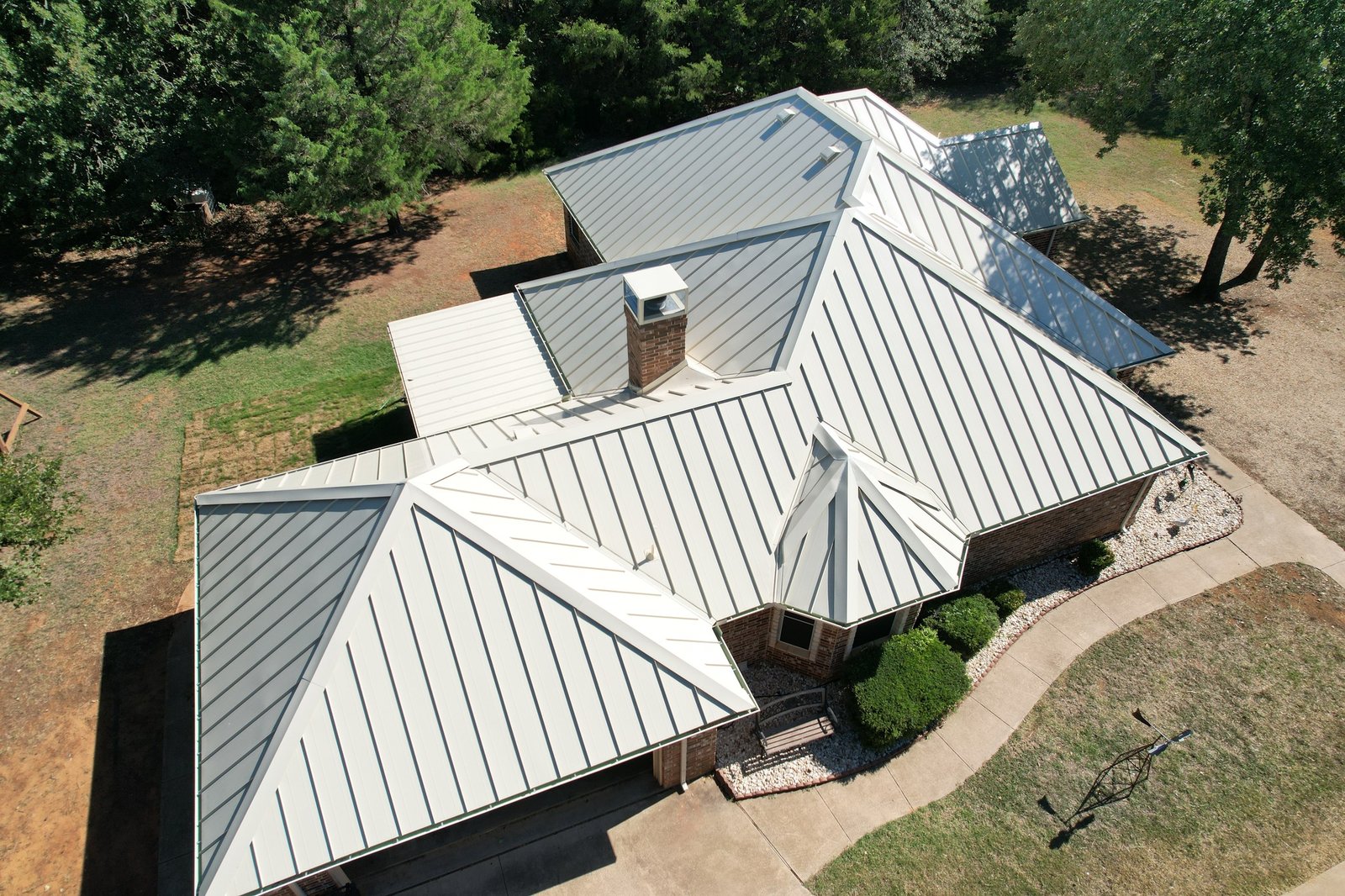
There’s something undeniably appealing about a metal roof. The clean lines, the modern aesthetic, the promise of a roof that could outlast your mortgage—these factors make metal roofing increasingly popular in upscale Aledo neighborhoods and throughout Parker County.
Advantages of Premium Metal Roofing:
Metal roofing systems come in several distinct styles, each offering unique aesthetic and performance characteristics. Standing seam metal roofing features vertical panels with concealed fasteners, creating that clean, contemporary look you see on high-end custom homes. The raised seams not only provide visual interest but also create channels that efficiently direct water off the roof while accommodating the thermal expansion and contraction that metal naturally experiences. Metal shingles and tiles replicate the appearance of traditional roofing materials while delivering metal’s performance advantages. Stone-coated steel combines a steel substrate with a stone chip finish, offering exceptional durability with a more traditional aesthetic that blends seamlessly into established neighborhoods.
The engineering behind modern metal roofing systems is sophisticated. Manufacturers use various metals including steel, aluminum, copper, and zinc, each offering distinct advantages. Steel roofing panels provide exceptional strength and impact resistance while remaining cost-effective. Aluminum offers superior corrosion resistance, particularly valuable in coastal regions or areas with high humidity. Copper develops a distinctive patina over time, creating a living finish that many homeowners find beautiful. Zinc provides self-healing properties where minor scratches naturally oxidize and blend into the surrounding material.
The coating systems applied to metal roofing panels deserve careful consideration. Basic painted finishes provide color and some protection, but premium coating systems like Kynar 500 or Hylar 5000 offer dramatically superior performance. These fluoropolymer coatings resist fading, chalking, and chemical degradation far better than conventional paints. They maintain their color and gloss for decades, ensuring your roof looks as good twenty years from now as it does the day we install it. The reflective properties of these coatings can dramatically reduce solar heat gain, keeping your attic cooler and reducing the workload on your air conditioning system.
The installation expertise required for metal roofing is considerably higher than asphalt shingles. Metal panels expand and contract with temperature changes, and the fastening system must accommodate this movement without creating stress points that could lead to panel distortion or fastener failure. Standing seam systems use specialized clips that allow panels to move independently while maintaining weather-tight seals. Exposed fastener systems require precise placement and proper sealing to prevent water infiltration. Flashing details around chimneys, skylights, and roof penetrations become more critical with metal roofing because even minor installation errors can create pathways for water infiltration.
Thermal movement represents one of the most misunderstood aspects of metal roofing. A metal roof can expand and contract significantly as temperatures fluctuate between cold winter nights and hot summer afternoons. Proper installation techniques account for this movement, using fastening systems that secure the roof while allowing controlled expansion and contraction. When installers fail to accommodate thermal movement, the results can include fastener backing out, panel distortion, seam separation, and even structural damage to the roof deck. This is precisely why working with certified metal roofing installers matters so much. We’ve invested in specialized training, tools, and techniques that ensure your metal roof performs exactly as the manufacturer intended.
The acoustic properties of metal roofing concern some homeowners who worry about noise during rain events. Modern metal roofing systems installed over solid roof decking with proper underlayment and adequate attic insulation produce surprisingly little noise. The solid substrate prevents the “drumming” effect that occurs when metal panels are installed over open framing. Quality underlayment provides additional sound dampening. Many homeowners report that their metal roofs are actually quieter during rain than their previous asphalt shingle roofs, particularly when premium installation techniques include sound-dampening materials.
Lightning concerns represent another common misconception about metal roofing. Metal roofs do not attract lightning strikes. Lightning seeks the path of least resistance to ground, which typically means the tallest object in an area regardless of material. However, metal roofing does provide advantages if lightning strikes your home. The non-combustible metal safely dissipates the electrical charge across the roof surface and down to ground, whereas lightning striking a combustible roofing material could ignite a fire. This fire resistance makes metal roofing particularly valuable in areas prone to wildfires or in homes with significant tree coverage.
If you’re torn between the traditional appearance of shingles and the longevity of metal, stone-coated steel roofing deserves serious consideration. This hybrid technology features a steel substrate coated with stone chips, delivering metal’s durability with the aesthetic appeal of traditional roofing materials.
Stone-Coated Steel Advantages:
Stone-coated steel represents a middle ground in both performance and investment. The manufacturing process begins with a steel substrate that provides structural strength and longevity. This steel core receives multiple protective coatings including a zinc-aluminum alloy that provides corrosion resistance, followed by an acrylic basecoat that ensures proper adhesion of the stone chips. Natural stone granules are then embedded in an acrylic polymer, creating the textured surface that provides both aesthetic appeal and functional benefits. Finally, an acrylic topcoat seals and protects the stone chips, ensuring they remain firmly attached throughout the roof’s lifespan.
The stone chip coating serves multiple purposes beyond aesthetics. The textured surface breaks up water flow, reducing the velocity of water running off the roof. This controlled water flow reduces erosion around your home’s foundation and makes stone-coated steel roofs quieter during rain events than smooth metal panels. The stone chips also provide additional impact resistance, absorbing hail impact energy before it reaches the steel substrate. This multi-layer defense system explains why stone-coated steel roofs perform exceptionally well in hail-prone regions like Parker County.
The profile options available in stone-coated steel allow homeowners to achieve virtually any aesthetic they desire. Manufacturers produce panels that convincingly replicate traditional wood shake shingles, complete with the dimensional texture and shadow lines that make wood shake so appealing. Other profiles mimic Mediterranean clay tiles, slate tiles, or traditional asphalt shingles. This versatility means you can achieve the look of premium roofing materials that might otherwise be prohibitively expensive or structurally impractical for your home.
The interlocking panel design of stone-coated steel roofing provides exceptional wind resistance. Unlike individual shingles that can be lifted by wind getting underneath them, stone-coated steel panels interlock with adjacent panels, creating a unified roofing surface. Wind cannot get underneath individual panels to create uplift forces. The mechanical fastening system secures panels directly to the roof deck, and the interlocking design distributes wind loads across multiple panels rather than concentrating stress on individual fasteners. This engineered approach to wind resistance explains why stone-coated steel roofs regularly withstand severe storms that damage conventional roofing materials.
The weight advantage of stone-coated steel becomes particularly important for homes with structural limitations or for homeowners considering upgrading from asphalt shingles to a more premium material. Concrete tile roofs, while beautiful and durable, weigh several times more than asphalt shingles and often require structural reinforcement before installation. Stone-coated steel weighs only slightly more than architectural shingles, meaning most homes can accommodate this upgrade without structural modifications. This weight advantage also simplifies installation, reduces structural stress, and provides additional safety margin in areas with heavy snow loads.
The roofing material you choose will affect your home in ways that extend far beyond simple weather protection. This decision impacts your insurance premiums, your cooling costs, your home’s resale value, your maintenance requirements, and ultimately, your peace of mind for the next several decades.
Insurance companies in North Texas have become increasingly sophisticated about roofing materials. After paying out billions in hail damage claims over the past decade, carriers now offer significant premium discounts for impact-resistant roofing materials. The relationship between roofing materials and insurance extends beyond just premium discounts—it affects your coverage terms, deductibles, and even whether carriers will continue insuring your home after storm damage.
The testing methodology for impact resistance follows standardized protocols established by Underwriters Laboratories. Impact resistance ratings range from Class 1 through Class 4, with Class 4 representing the highest level of protection. The testing involves dropping steel balls of increasing size onto roofing material samples from specified heights. Class 4 materials must withstand impacts that simulate large hail traveling at terminal velocity, the exact scenario that devastates roofs throughout Weatherford and Aledo during severe spring storms.
Understanding how insurance companies evaluate roof damage claims helps explain why material selection matters so much. When adjusters inspect hail damage, they look for specific indicators including bruising of the shingle mat, cracking, granule loss, and exposed substrate. Impact-resistant materials resist these forms of damage, meaning your roof survives storms that would require complete replacement of conventional materials. This durability translates directly into fewer claims, lower insurance costs, and better coverage terms.
The claims history associated with your property affects your insurance situation for years. Multiple roof claims can lead to policy non-renewal, difficulty finding coverage, or substantially higher premiums. By investing in impact-resistant roofing materials, you reduce the likelihood of filing claims after moderate hail events, protecting your claims history and maintaining favorable insurance terms. Many homeowners discover that the insurance savings over a decade or two substantially offset any additional investment in premium roofing materials.
When we recommend specific roofing materials, we’re not just thinking about initial installation. We’re considering how those materials will perform when the next major hailstorm rolls through Parker County. We’re thinking about whether your insurance company will provide full replacement coverage or depreciate your claim based on material selection. We’re considering whether you’ll face another roof replacement in ten years or whether you’ll have decades of worry-free protection.
Your roof absorbs an enormous amount of solar radiation during Texas summers. Dark-colored roofing materials can reach extreme surface temperatures, turning your attic into an oven and forcing your air conditioning system to work overtime. The relationship between roofing materials and energy consumption involves complex interactions between solar reflectance, thermal emittance, and attic ventilation.
Cool roof technology has advanced significantly in recent years. The fundamental principle involves reflecting solar radiation rather than absorbing it, reducing heat transfer into your home. Solar reflectance measures the percentage of solar energy that bounces off the roof surface rather than being absorbed. Thermal emittance measures how efficiently the roof releases any heat it does absorb. The combination of high solar reflectance and high thermal emittance creates roofing materials that stay dramatically cooler than conventional products.
Reflective shingles use specially engineered granules that reflect solar radiation across the infrared spectrum. While these granules may appear dark to the human eye, they reflect the infrared wavelengths that carry most of the sun’s heat energy. This technology allows homeowners to choose darker colors that complement their home’s aesthetic while still achieving impressive energy performance. Metal roofing systems with reflective coatings can reflect the majority of solar energy, keeping the roof surface and attic space substantially cooler than conventional materials.
The energy savings extend beyond just reduced cooling costs. When your attic stays cooler, your air conditioning system doesn’t work as hard, extending its lifespan and reducing maintenance requirements. Ductwork in the attic operates more efficiently when surrounded by cooler air rather than superheated air. The entire thermal envelope of your home performs better when the roof isn’t acting as a massive heat source radiating energy into your living space.
The color selection matters too. Lighter colored roofing materials naturally reflect more solar radiation than dark colors. However, modern cool roof technology allows even darker colors to achieve impressive reflectivity through infrared-reflective pigments that are invisible to the human eye but highly effective at reflecting heat energy. This advancement means you don’t have to compromise aesthetic preferences to achieve energy efficiency.
Attic ventilation works synergistically with cool roofing materials to manage heat buildup. Even the most reflective roofing materials absorb some solar energy, and proper ventilation removes this heat before it can conduct through your ceiling insulation into living spaces. The combination of reflective roofing materials and adequate ventilation creates a comprehensive thermal management system that keeps your home comfortable while reducing energy consumption.
Your roof represents approximately forty percent of your home’s visible exterior. The material, color, and style you choose will either enhance or detract from your home’s curb appeal and resale value. In established neighborhoods throughout Aledo and Weatherford, there are often unwritten aesthetic standards that influence property values.
Driving through upscale subdivisions, you’ll notice that most premium homes feature dimensional roofing materials—either architectural shingles with significant shadow lines or metal roofing systems with clean, contemporary profiles. Basic three-tab shingles have become associated with builder-grade construction and rental properties. The visual difference is immediately apparent, and potential buyers notice. The dimensional appearance of premium roofing materials creates depth and visual interest that flat, single-layer shingles simply cannot match.
Color coordination matters more than most homeowners realize. Your roofing material should complement your home’s existing exterior colors, architectural style, and neighborhood standards. Earth tones work beautifully with traditional ranch and craftsman homes, creating a warm, inviting appearance that enhances curb appeal. Grays and charcoals complement contemporary designs, providing a sophisticated, modern aesthetic. Browns and tans coordinate well with brick homes, creating a cohesive color palette that ties the entire exterior together. The wrong color choice can make even expensive roofing materials look out of place and detract from your home’s value.
Architectural style should guide material selection. Traditional homes with steep roof pitches showcase dimensional shingles beautifully, with the shadow lines and texture becoming prominent design elements. Contemporary homes with lower pitches often benefit from the clean lines of standing seam metal roofing. Mediterranean or Spanish-style homes traditionally feature tile roofing, but stone-coated steel tile profiles can achieve similar aesthetics with better performance and lower weight. Matching roofing materials to architectural style creates visual harmony that enhances your home’s character.
Neighborhood context influences material selection in subtle but important ways. In established neighborhoods where most homes feature traditional shingle roofs, a metal roof might stand out as unusual rather than premium. Conversely, in newer developments where metal roofing is becoming common, architectural shingles might appear dated. Understanding these neighborhood dynamics helps ensure your roofing investment enhances rather than detracts from your home’s market position.
The resale implications of roofing material selection extend beyond just aesthetics. Real estate agents consistently report that homes with newer roofs sell faster and command higher prices than comparable homes with aging roofs. Buyers appreciate not having to worry about roof replacement for decades. They value transferable warranties that provide long-term protection. They respond positively to premium materials that signal overall home quality. The roofing material you choose today will influence your home’s marketability and value when you eventually decide to sell.
Here’s the truth that most roofing contractors won’t tell you: the best roofing materials in the world will fail prematurely if they’re not installed correctly. We’ve seen expensive metal roofs leak because fasteners were over-driven. We’ve seen premium architectural shingles blow off in moderate winds because starter strips weren’t properly installed. We’ve seen stone-coated steel roofs develop rust issues because cut edges weren’t properly sealed.
GreenLight Roofing and Remodeling maintains certifications with the industry’s leading manufacturers—CertainTeed, Owens Corning, and others—because these programs require ongoing training, quality inspections, and adherence to installation standards that exceed basic building codes. These aren’t just marketing badges. They represent hundreds of hours of technical training and demonstrated installation expertise.
The certification process involves rigorous requirements that separate qualified professionals from general contractors who occasionally install roofs. Manufacturers require certified contractors to complete comprehensive training programs covering product specifications, installation techniques, common installation errors, and troubleshooting procedures. This training goes far beyond what building codes require, addressing the nuanced details that determine whether roofing materials perform optimally or fail prematurely.
Quality control inspections verify that certified contractors actually implement the techniques they learned during training. Manufacturers conduct random job site inspections, examining installation details, material handling procedures, and adherence to specifications. Contractors who fail these inspections risk losing their certification status. This ongoing accountability ensures that certification represents current, verified installation capability rather than a one-time achievement that becomes meaningless over time.
When we install CertainTeed roofing materials, we’re backed by their comprehensive warranty coverage—protection that extends beyond the shingles themselves to include underlayment, starter strips, ridge caps, and even workmanship. This comprehensive protection is only available through certified contractors who have proven their installation capabilities through rigorous inspections and customer satisfaction metrics. The warranty coverage provides you with recourse if anything goes wrong, backed by a manufacturer with the financial resources to honor their commitments decades into the future.
The certification process requires regular recertification, ensuring our installation teams stay current with evolving best practices, new product technologies, and updated building codes. Roofing technology continues advancing, with manufacturers regularly introducing improved materials and refined installation techniques. When roofing materials manufacturers update their installation requirements, we’re among the first to receive training and implement those changes. This commitment to ongoing education ensures that your roof benefits from the latest advancements in roofing technology and installation methodology.
The roofing materials you see from the street represent only half of a properly engineered roofing system. Beneath those shingles or metal panels, a sophisticated moisture management and ventilation system protects your home from the real enemies: heat buildup, moisture infiltration, and condensation damage.
Inadequate attic ventilation is the leading cause of premature roofing material failure in North Texas. When summer heat turns your attic into an extremely hot environment, that thermal stress literally cooks your roofing materials from below, accelerating aging and voiding manufacturer warranties. The heat doesn’t just affect the roofing materials—it degrades the adhesives that bond shingles together, softens the asphalt that provides waterproofing, and accelerates the oxidation processes that cause materials to become brittle and crack.
Proper ventilation combines adequate intake vents at the eaves with exhaust vents at the ridge, creating continuous airflow that removes heat and moisture. The physics are straightforward: hot air rises, so exhaust vents at the roof peak allow heated air to escape. This creates negative pressure that draws cooler air in through intake vents at the eaves. The continuous flow of air prevents heat buildup, removes moisture that could condense and damage roof decking, and extends the lifespan of roofing materials by keeping them cooler.
The balance between intake and exhaust ventilation matters enormously. Many homes have adequate exhaust ventilation through ridge vents or roof-mounted turbines but insufficient intake ventilation at the eaves. This imbalance prevents proper airflow, reducing ventilation effectiveness. We calculate the required ventilation area based on your attic square footage and ensure that intake and exhaust ventilation are properly balanced to create optimal airflow.
Synthetic underlayment has revolutionized roofing system performance. Unlike traditional felt paper that can deteriorate from moisture exposure, synthetic underlayment provides a waterproof secondary barrier that protects your roof deck during installation and throughout the life of your roof. Traditional felt paper tears easily, deteriorates when exposed to sunlight, and can absorb moisture that leads to deck rot. Synthetic underlayment resists tearing, withstands prolonged sun exposure during installation, and provides superior waterproofing.
The waterproofing characteristics of synthetic underlayment provide critical protection during severe weather. Wind-driven rain can work its way under shingles, particularly around roof penetrations, valleys, and eaves. Synthetic underlayment prevents this water from reaching your roof deck and leaking into your home. This secondary barrier provides peace of mind, knowing that even if your primary roofing material experiences minor damage, your home remains protected.
Ice and water shield represents another critical component of comprehensive roofing systems. This self-adhering membrane creates a waterproof barrier in vulnerable areas including eaves, valleys, and around roof penetrations. The rubberized asphalt backing bonds directly to the roof deck, creating a seal that prevents water infiltration even under the most severe conditions. In areas where ice dams can form—less common in Texas but possible during severe winter weather—ice and water shield prevents the backup of water under shingles that causes interior damage.
Roofing installation involves hundreds of small details that collectively determine whether your roof performs for three decades or fails in five years. Proper nail placement and penetration depth. Correct shingle exposure and alignment. Proper flashing installation around chimneys, skylights, and roof penetrations. Adequate sealant application at vulnerable areas. Each of these details matters enormously.
Nail placement affects wind resistance, waterproofing, and long-term durability. Manufacturers specify exactly where nails should be placed on each shingle—typically in the nailing strip that will be covered by the next course of shingles. Nails placed too high won’t adequately secure the shingle. Nails placed too low will be visible and create potential leak points. Nails driven at an angle rather than straight can tear the shingle mat or fail to provide adequate holding power. Nails driven too deep can puncture the shingle, creating leak points and weak spots where wind can catch the shingle edge.
The nail penetration depth requires precise control. Nails must penetrate completely through the shingle and into the roof deck far enough to provide secure attachment, but not so deep that they over-compress the shingle or puncture through the deck. Over-driven nails create dimples in the shingle surface where water can pool. They can tear the shingle mat, creating weak points. Under-driven nails leave the nail head protruding, preventing the overlying shingle from sealing properly and creating points where wind can catch and lift shingles.
Shingle exposure—the amount of each shingle that remains visible after the next course is installed—must be consistent and match manufacturer specifications. Inconsistent exposure creates an unprofessional appearance with wavy horizontal lines. More importantly, incorrect exposure affects the number of shingle layers protecting each area of the roof. Too much exposure leaves areas with insufficient coverage. Too little exposure wastes material and can create excessive weight and thickness that prevents proper sealing.
Flashing installation represents the most critical aspect of preventing roof leaks. Flashing creates waterproof transitions between roofing materials and vertical surfaces like chimneys, walls, and skylights. Step flashing along walls must be woven with each course of shingles, creating a shingled effect that directs water down and away from the wall. Counter flashing over the step flashing provides additional protection. Chimney flashing requires careful attention to detail, with base flashing, step flashing, and cricket installation all contributing to waterproof protection.
Valley installation techniques significantly affect long-term performance. Open valleys use metal flashing with shingles cut to create a channel for water flow. Closed valleys weave or cut shingles from both roof planes together. Each technique has advantages, and proper execution requires skill and attention to detail. Valley flashing must extend far enough up both roof planes to prevent water infiltration. Shingles must be properly cut and sealed to prevent wind from lifting edges. The valley must be straight and uniform in width to provide both proper water flow and professional appearance.
Every home is different, and the optimal roofing material depends on multiple factors specific to your situation. Your budget obviously matters, but so does your timeline for staying in the home, your insurance situation, your home’s architectural style, your neighborhood standards, and your personal priorities regarding maintenance, energy efficiency, and aesthetics.
The financial aspect of roof replacement causes more anxiety than perhaps any other factor. You’re looking at a significant investment depending on material selection, roof complexity, and home size. That’s not a trivial expense, and the fear of making the wrong choice can be paralyzing.
We believe in complete pricing transparency. During your consultation, we’ll provide detailed estimates for different material options, explaining exactly what’s included and why costs vary. We’ll show you how premium materials often deliver better value over the roof’s lifespan than cheaper alternatives that require replacement sooner. The conversation extends beyond just initial installation costs to include long-term factors like maintenance requirements, energy savings, insurance implications, and expected lifespan.
Understanding the total cost of ownership helps put material selection in perspective. A roofing material that costs less initially but requires replacement sooner may actually cost more over your ownership period than a premium material with higher upfront investment but longer lifespan. When you factor in the disruption of having your roof replaced, the risk of damage during installation, and the hassle of managing another major home improvement project, the value of longer-lasting materials becomes even more apparent.
Flexible financing options make quality roofing materials accessible without depleting your savings or touching retirement accounts. We work with lending partners who specialize in home improvement financing, offering terms that fit your budget. Many homeowners are surprised to discover that monthly payments for premium roofing materials cost less than they spend on other discretionary expenses, while delivering decades of protection and peace of mind.
The financing conversation should include consideration of how roofing material selection affects other costs. Impact-resistant materials that reduce insurance premiums create ongoing savings that partially offset financing costs. Energy-efficient materials that reduce cooling costs provide monthly savings. These secondary financial benefits make premium materials more affordable than they initially appear.
If storm damage prompted your roof replacement, your insurance claim will significantly impact your material options. Understanding how insurance companies evaluate roofing materials, calculate depreciation, and determine replacement coverage can mean the difference between a fully covered roof replacement and a substantial out-of-pocket expense.
We provide comprehensive insurance claim assistance, handling the documentation, adjuster meetings, and negotiations that homeowners find overwhelming. We speak the insurance company’s language, ensuring your claim accurately reflects the damage and the appropriate repair scope. We’ll help you understand your coverage, explain your material options within your policy limits, and identify opportunities to upgrade materials with minimal additional investment.
The insurance claim process begins with documenting damage. We photograph and document all hail impacts, wind damage, and related issues, creating a comprehensive record that supports your claim. When the insurance adjuster inspects your roof, we’re there to ensure they identify all damage and understand the full scope of necessary repairs. Insurance adjusters handle dozens of claims and may miss damage that experienced roofing professionals readily identify.
Understanding your policy’s replacement cost coverage versus actual cash value coverage dramatically affects your material options. Replacement cost coverage pays to replace your roof with comparable materials regardless of your old roof’s age. Actual cash value coverage depreciates your claim based on your roof’s age, leaving you to cover the depreciation amount. Many homeowners don’t fully understand their coverage until they file a claim, and the difference can amount to thousands of dollars.
Insurance companies increasingly incentivize impact-resistant roofing materials through premium discounts and enhanced coverage. We’ll help you understand how material selection affects not just your current claim but your future insurance costs and coverage. Some carriers offer better terms for homes with impact-resistant roofing, including lower deductibles or guaranteed replacement coverage. These policy enhancements can provide substantial value over the life of your roof.
Architectural asphalt shingles typically last several decades in North Texas when properly installed and maintained, while metal roofing systems can last even longer. Stone-coated steel falls in between. However, these lifespans depend heavily on proper installation, adequate ventilation, and regular maintenance. The extreme temperature fluctuations, intense UV radiation, and severe weather events common to our region accelerate aging compared to milder climates. Proper installation techniques and quality materials specifically engineered for our climate conditions are essential for achieving expected lifespans.
Yes, most insurance carriers in Texas offer premium discounts for Class 4 impact-rated roofing materials. The discount applies to the wind and hail portion of your policy, and the savings typically offset the additional material cost within several years while providing superior protection. Beyond the direct premium savings, impact-resistant materials reduce the likelihood of filing claims after moderate hail events, protecting your claims history and maintaining favorable insurance terms. Some carriers also offer enhanced coverage terms for homes with impact-resistant roofing, including lower deductibles or guaranteed replacement coverage.
While building codes sometimes allow overlay installations, we strongly recommend complete tear-off and replacement. Overlays hide existing damage, add excessive weight to your roof structure, trap moisture that accelerates deterioration, and typically void manufacturer warranties. The short-term savings rarely justify the long-term risks. Additionally, overlay installations prevent proper inspection of the roof deck, meaning hidden rot or structural damage remains undetected until it causes serious problems. Most manufacturer warranties require installation over a clean deck, and overlays eliminate your ability to claim warranty coverage for future issues.
Consider your home’s existing exterior colors, architectural style, and neighborhood standards. Lighter colors reflect more heat and reduce cooling costs, while darker colors absorb heat but may better complement your home’s aesthetic. We provide color visualization tools and samples to help you make confident decisions. The key is creating a cohesive color palette that ties together your roof, siding, brick, trim, and other exterior elements. Consider how the roof color will look in different lighting conditions and seasons. Drive through your neighborhood and observe which color combinations you find most appealing on homes similar to yours.
Premium architectural shingles typically provide the best return on investment for near-term sales, offering excellent curb appeal and broad buyer appeal at a moderate price point. Metal roofing appeals to specific buyer segments but may not justify the premium cost if you’re selling soon. Focus on materials that enhance curb appeal and provide verifiable warranties that transfer to new owners. Real estate agents consistently report that homes with newer roofs sell faster and command higher prices. The key is choosing materials that appeal to the broadest range of potential buyers while providing documented protection that reduces buyer concerns about near-term roofing expenses.