
If you’re lying awake at night wondering whether water is silently destroying your home from the inside out, you’re not alone. Homeowners across Weatherford, Aledo, and surrounding Parker County communities are facing the same terrifying reality: visible storm damage on their roofs that’s getting worse with every passing day, insurance companies that seem designed to frustrate rather than help, and a roofing industry filled with contractors you’re not sure you can trust.
Maybe you’ve already tried patching the damage yourself or hired a handyman to apply some tar and sealant, hoping to squeeze out a few more years. Perhaps you’ve spent countless hours researching roofing materials online, collected quotes from eight or ten different companies that range wildly in price, and you’re more confused now than when you started. You might be stuck in insurance claim limbo, calling your adjuster every week only to get the runaround while your roof continues deteriorating.
The anxiety is real. Every time it rains, you’re listening for the sound of dripping water. Every time you pull into your driveway, you see the missing shingles and hail damage, and you feel that knot tighten in your stomach. You know this problem isn’t going away on its own, but the fear of making a significant mistake has you paralyzed.
Here’s what you need to know right now: stone-coated steel roofing offers the perfect solution for Texas homeowners who refuse to compromise between durability, aesthetics, and long-term value. And GreenLight Roofing and Remodeling specializes in making the entire process—from insurance claims to final installation—completely stress-free.
Traditional asphalt shingles weren’t designed for the punishment that Texas weather dishes out year after year. Hail storms that leave golf ball-sized dents in your car do even worse damage to conventional roofing materials. Wind gusts that regularly exceed 60 mph during spring storms rip shingles right off your roof. The relentless Texas sun—with UV radiation that’s significantly more intense than northern states—literally bakes the life out of asphalt shingles, causing them to crack, curl, and fail years before their advertised lifespan.
The composition of traditional asphalt shingles makes them particularly vulnerable to Texas weather conditions. These shingles consist of a fiberglass mat saturated with asphalt and covered with ceramic granules. While this construction works adequately in moderate climates, the extreme temperature swings common in North Texas create constant expansion and contraction that breaks down the asphalt binder. During summer months, when roof surface temperatures can exceed 160 degrees, the asphalt becomes soft and pliable, allowing granules to dislodge and wash away with each rain. In winter, the same asphalt becomes brittle and prone to cracking.
You’ve probably noticed neighbors replacing their roofs every dozen years or so, sometimes even sooner after major storm events. That’s not normal wear and tear—that’s material failure. And every time you replace a traditional asphalt roof, you’re making a substantial investment for a product that’s virtually guaranteed to fail again within a similar timeframe. The cycle becomes exhausting and expensive, with homeowners essentially renting their roof protection rather than owning a permanent solution.
The real cost isn’t just the replacement expense. It’s the constant worry, the insurance claims, the water damage that happens between the time you notice the problem and when you finally get it fixed. Water infiltration doesn’t announce itself with dramatic flooding in most cases. Instead, it works silently inside your walls and attic, creating perfect conditions for mold growth, wood rot, and structural deterioration. By the time you notice water stains on your ceiling or smell that musty odor, thousands of dollars in damage may have already occurred. It’s the decreased home value when potential buyers see a deteriorating roof and immediately deduct significant amounts from their offer—or walk away entirely.
Stone-coated steel roofing represents a fundamental shift in how we think about roof protection. Instead of accepting that your roof will fail and need replacement every dozen years or so, stone-coated steel roofing is engineered to last multiple decades with virtually no maintenance. This isn’t marketing hype—it’s materials science backed by decades of real-world performance in extreme climates around the world.
The technology behind stone-coated steel roofing was originally developed in New Zealand, where extreme weather conditions demanded a roofing solution that could withstand hurricane-force winds, intense UV radiation, and corrosive salt air. Engineers recognized that steel provided the structural strength needed, but required protection from the elements to prevent corrosion and provide aesthetic appeal. The solution was a multi-layer system that combines the best properties of metal roofing with the visual appeal and protective qualities of stone.
The Engineering Advantage of Stone-Coated Steel:
The steel core substrate forms the foundation of the system’s exceptional performance. Unlike the fiberglass mat used in asphalt shingles, steel provides genuine structural integrity that doesn’t degrade over time. This steel substrate is manufactured to precise specifications, ensuring consistent thickness and strength across every panel. The steel is then treated with a specialized coating process that creates multiple layers of protection against corrosion, even in the most challenging environments.
The stone coating applied to the steel surface serves multiple critical functions. First, it provides a sacrificial barrier that absorbs UV radiation before it can reach the steel substrate. This is fundamentally different from painted metal roofing, where UV exposure gradually breaks down the paint and exposes the metal to the elements. The natural stone granules used in stone-coated steel roofing are inherently UV-stable and will not fade or degrade even after decades of intense sun exposure. Second, the stone coating provides exceptional impact resistance, distributing the force of hail strikes across the entire surface rather than allowing penetration at a single point. Third, the textured stone surface provides acoustic dampening that eliminates the noise concerns sometimes associated with metal roofing.
The interlocking panel design represents another significant engineering advantage. Traditional shingles are individual pieces that overlap to create a water barrier, but each individual shingle can be lifted or damaged by wind without affecting adjacent shingles. Stone-coated steel panels interlock with adjacent panels, creating a continuous system where the strength of each panel reinforces the others. This interlocking design creates exceptional wind resistance, with properly installed stone-coated steel roofing able to withstand extreme wind events that would completely destroy traditional roofing materials.
Here’s what this means in practical terms: while your neighbors are replacing their asphalt roofs for the second or third time over the coming decades, spending substantial amounts in the process, your stone-coated steel roof will still be protecting your home with zero maintenance and zero replacement cost. The math isn’t even close when you consider the total cost of ownership over the lifespan of your home.
One of the biggest misconceptions about metal roofing is that it looks industrial or commercial. That might have been true decades ago, but modern stone-coated steel roofing offers stunning profiles that perfectly replicate traditional roofing aesthetics while delivering superior performance. The manufacturing technology has advanced to the point where stone-coated steel roofing is virtually indistinguishable from the premium roofing materials it replicates, at least from ground level.
The aesthetic versatility of stone-coated steel roofing allows homeowners to achieve virtually any architectural style without compromising on performance. Whether your home features traditional ranch architecture, Mediterranean influences, contemporary design, or classic colonial styling, there’s a stone-coated steel profile that complements and enhances your home’s appearance. This versatility is particularly valuable in established neighborhoods where homeowners associations may have specific requirements regarding roofing appearance, or in historic districts where maintaining architectural character is essential.
Available Stone-Coated Steel Profiles:
The shake profile is particularly popular among homeowners who love the rustic, textured appearance of cedar shake roofing but understand the significant drawbacks of wood roofing materials. Traditional cedar shake roofs require constant maintenance, including regular treatment with preservatives to prevent rot and insect damage. They’re also highly combustible, creating serious fire risk in areas prone to wildfires or even from nearby fireworks or burning debris. Stone-coated steel shake profile roofing delivers the dimensional texture and shadow lines that make cedar shake so visually appealing, but with none of the maintenance requirements or safety concerns. The individual panels are sculpted to replicate the irregular edges and varied thickness of hand-split cedar shakes, creating authentic visual depth that’s remarkably convincing.
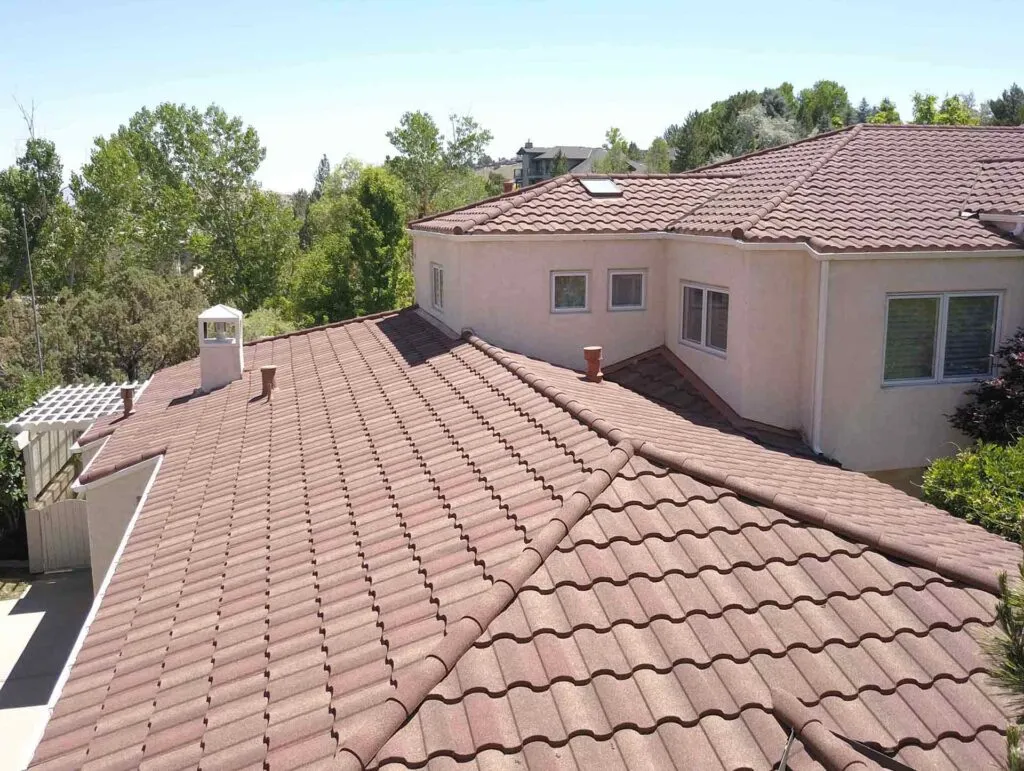
The tile profile addresses a common challenge for homeowners who love the Mediterranean aesthetic of clay or concrete tile roofing but face structural limitations. Traditional clay tile roofing is extremely heavy, often requiring additional structural support that can add substantial expense to a roofing project. Concrete tile is somewhat lighter but still significantly heavier than most roofing materials. Stone-coated steel tile profile roofing weighs a fraction of traditional tile while perfectly replicating the distinctive curved profile and shadow lines. This allows homeowners to achieve the tile aesthetic without the structural concerns or the fragility issues that plague traditional tile roofing.
The shingle profile is designed for homeowners who prefer the traditional appearance of architectural shingles but want dramatically superior performance. This profile replicates the dimensional appearance of premium architectural shingles, with varied tab sizes and shadow lines that create visual interest. The stone coating provides the same color variation and texture found in quality asphalt shingles, but without the fading and granule loss that degrades the appearance of asphalt shingles over time.
The slate profile is the ultimate choice for homeowners seeking the prestigious appearance of natural slate roofing. Genuine slate roofing is extraordinarily expensive and requires specialized installation expertise. The material is also extremely heavy and quite fragile, with individual slates prone to cracking from impact or even from the stress of walking on the roof during maintenance. Stone-coated steel slate profile roofing captures the elegant, refined appearance of natural slate, including the subtle color variations and irregular edges that characterize premium slate, while providing the durability and impact resistance that makes stone-coated steel so practical.
The stone coating isn’t just functional—it’s beautiful. Natural stone granules are permanently bonded to the steel substrate through a specialized adhesive process that creates exceptional durability. These aren’t painted-on colors that will fade or peel over time. The natural stone granules provide rich, dimensional color that remains vibrant throughout the life of your roof. The manufacturing process allows for blending of different colored stone granules, creating subtle color variations that add depth and visual interest to your roof. This is fundamentally different from the uniform appearance of painted metal roofing or the increasingly faded appearance of aging asphalt shingles.
Your roof will look as stunning decades from now as it does the day we install it. While your neighbors’ asphalt shingle roofs are fading from black to gray, losing granules, and developing that worn, weathered appearance that screams “this roof needs replacement,” your stone-coated steel roof will maintain its original beauty. The color stability of the natural stone coating means that if you ever need to replace a panel due to some unforeseen damage, the replacement panel will match the existing roof perfectly, unlike asphalt shingles where replacement shingles are noticeably different from the weathered originals.
When neighbors ask who installed your roof (and they will), you’ll feel proud instead of embarrassed. When potential buyers evaluate your home, they’ll see a premium roofing system that adds substantial value to your property instead of a liability that detracts from it. The visual appeal of stone-coated steel roofing is a genuine competitive advantage when it comes time to sell your home, with real estate agents consistently noting that homes with premium roofing materials attract more buyer interest and command higher prices.
Let’s be honest about insurance claims: they’re designed to be frustrating. Insurance companies profit when they deny claims or undervalue damage, and they’ve perfected the art of making the process so complicated that homeowners simply give up. Adjusters use technical terminology you don’t understand, take photos from angles that minimize visible damage, and apply depreciation formulas that seem designed to avoid paying what they actually owe. The entire system seems designed to exhaust your patience and make you accept less than you deserve.
The insurance claim process has become increasingly adversarial over recent years. Insurance companies have implemented sophisticated software systems that guide adjusters toward minimum payouts. They’ve developed extensive databases of “typical” repair costs that often bear little resemblance to actual market rates in your area. They’ve trained adjusters to identify any possible reason to deny or reduce claims, from questioning whether damage was really caused by the claimed storm event to arguing that pre-existing conditions contributed to the damage.
Many homeowners don’t realize that the initial insurance estimate is just an opening offer, not a final determination. Insurance adjusters are trained to write conservative estimates that minimize payout, knowing that most homeowners will simply accept whatever the adjuster offers. They count on homeowners not understanding roofing terminology, not recognizing when damage has been overlooked, and not knowing how to effectively advocate for proper coverage. This information asymmetry heavily favors the insurance company and leaves homeowners at a significant disadvantage.
You shouldn’t have to become an insurance expert to get the coverage you’ve been paying premiums for year after year. That’s why GreenLight Roofing and Remodeling includes complete insurance claim management as part of our service. We level the playing field by bringing professional expertise to your side of the negotiation. We understand exactly how insurance adjusters think, what they’re looking for, and how to present evidence in a way that they cannot dispute or dismiss.
Our Insurance Claims Process:
Our comprehensive damage documentation process begins with a thorough roof inspection that examines every aspect of your roofing system. We don’t just look at the obvious damage visible from the ground. We get on your roof with professional equipment and systematically document every area of damage, no matter how minor it might seem. We use high-resolution photography that clearly shows impact points from hail, wind damage to shingles and flashing, and any other storm-related damage. We also utilize drone technology to capture aerial imagery that provides perspective impossible to achieve from ground level or even from a ladder. This aerial documentation is particularly valuable for showing the extent and pattern of damage across your entire roof.
Our written reports translate the visual evidence into clear, detailed descriptions using the same terminology that insurance adjusters use in their own reports. We identify specific damage by location, describe the type and severity of damage, and explain how the damage compromises the integrity and performance of your roofing system. This documentation package provides irrefutable evidence that even the most skeptical insurance adjuster cannot dismiss or minimize.
When we communicate directly with insurance adjusters, we speak their language and understand their concerns. We know what questions they’ll ask and what objections they might raise. We present our evidence in a professional, factual manner that addresses their requirements and leaves no room for dispute. We’re not confrontational or adversarial—we simply present the facts in a way that makes proper coverage the obvious and appropriate outcome. Many insurance adjusters actually appreciate working with professional contractors who understand the process and provide quality documentation, as it makes their job easier and reduces the likelihood of disputes or complaints.
Supplement negotiation is a critical part of the insurance claim process that many homeowners don’t understand. The initial insurance estimate is based on what’s visible before any work begins. However, once we remove the damaged roofing materials, we often discover additional damage that wasn’t visible during the initial inspection. This might include damaged decking, deteriorated underlayment, or other issues that must be addressed for proper roof installation. Insurance policies typically cover this additional damage, but it requires filing a supplement to the original claim. We handle this entire process, documenting the additional damage, preparing the supplement request, and negotiating with the adjuster to ensure proper coverage.
Code upgrade advocacy is another area where our expertise protects your interests. Building codes evolve over time, and current codes often require materials or installation methods that weren’t required when your original roof was installed. Insurance policies typically cover the cost of bringing your roof up to current code, but adjusters don’t always include these upgrades in their initial estimates. We ensure that your claim includes proper coverage for code-required upgrades, so you’re not left paying out of pocket for items that should be covered by your insurance.
We’ve successfully managed hundreds of insurance claims for Weatherford and Aledo homeowners, recovering substantial coverage that insurance companies initially tried to deny or undervalue. Our expertise means you get maximum coverage with minimum stress. You don’t have to spend hours on the phone with adjusters, you don’t have to worry about whether you’re getting proper coverage, and you don’t have to navigate the complex claims process alone.
One of the most frustrating aspects of getting roof quotes is the wild variation in pricing. One contractor quotes one amount, another provides a substantially different figure, and a third claims they can do it for significantly less. How are you supposed to make an informed decision when the numbers are all over the map? The confusion is intentional in many cases, as some contractors use pricing opacity as a competitive strategy.
The truth is that many roofing contractors use intentionally confusing pricing strategies. The low-ball quote uses inferior materials and cuts corners on installation. They might plan to use the thinnest gauge steel available, skip important underlayment layers, or rush through installation with inexperienced crews. The high quote includes unnecessary upgrades and inflated profit margins, banking on homeowners who assume that higher price means better quality. And the middle quote might seem reasonable until you discover all the “extras” that weren’t included in the base price.
GreenLight Roofing and Remodeling uses transparent, itemized pricing that shows exactly what you’re paying for and why. We believe that homeowners deserve to understand exactly what they’re getting for their investment. Our estimates break down every component of the project, from materials to labor to disposal costs, so you can see where your money is going. This transparency allows you to make informed decisions about upgrades or alternatives, rather than trying to guess what’s included in a single lump-sum figure.
What’s Included in Every Stone-Coated Steel Installation:
The complete tear-off process is the foundation of a quality roof installation. While some contractors might suggest installing new roofing over your existing shingles to save time and money, this approach creates numerous problems. It prevents proper inspection of the roof deck, traps moisture between layers, creates an uneven surface that affects the appearance and performance of the new roof, and adds unnecessary weight to your roof structure. We remove all existing roofing materials down to the bare deck, allowing us to properly inspect and prepare the surface for your new stone-coated steel roof.
Proper disposal of the old roofing materials is more complex than simply throwing everything in a dumpster. We separate materials for recycling when possible, dispose of hazardous materials according to environmental regulations, and ensure that all debris is removed from your property. We use tarps and barriers to contain debris during removal, preventing damage to your landscaping and making cleanup faster and more thorough.
The comprehensive deck inspection is a critical step that reveals the true condition of your roof structure. We examine every square foot of decking, looking for signs of water damage, wood rot, structural weakness, or other issues that could compromise your new roof. Any damaged decking is replaced with new material that meets or exceeds current building code requirements. This ensures that your new stone-coated steel roof has a solid, stable foundation that will support it for decades to come.
Premium synthetic underlayment provides a secondary water barrier that protects your home even if water somehow penetrates the primary roofing layer. Traditional felt underlayment degrades over time and can fail long before the roof covering wears out. Synthetic underlayment is dramatically more durable, with superior tear resistance, better water resistance, and much longer lifespan. It also provides better protection during installation, allowing work to continue even if weather interrupts the project.
Proper ventilation is essential for roof longevity and energy efficiency, yet it’s often overlooked or inadequately addressed. We assess your existing ventilation system and recommend upgrades if needed to ensure proper air circulation through your attic space. Adequate ventilation prevents moisture accumulation that can lead to mold growth and wood rot, reduces heat buildup that shortens roof life and increases cooling costs, and helps maintain consistent temperature across your roof surface to prevent ice dam formation in winter.
The stone-coated steel panels we install are manufactured to exacting standards by leading industry manufacturers. These panels come with comprehensive coverage for both materials and finish, providing long-term protection for your investment. The panels are specifically designed for the profile you’ve selected, whether that’s shake, tile, shingle, or slate, and are manufactured with precise interlocking mechanisms that ensure proper fit and weather resistance.
Professional installation by factory-certified crews is what transforms quality materials into a quality roof. Our installation teams have undergone extensive training directly from the manufacturers of the stone-coated steel roofing systems we install. They understand the specific requirements for proper installation, from fastener placement to flashing details to panel alignment. They follow manufacturer specifications precisely, ensuring that your roof performs as designed and that manufacturer coverage remains valid.
Complete cleanup is a non-negotiable part of every project. Roofing projects generate substantial debris, from old shingles to packaging materials to metal fasteners and trim pieces. We perform thorough cleanup throughout the project and conduct a final comprehensive cleanup before we consider the job complete. We use powerful magnetic sweeps to remove metal debris from your driveway, walkways, and lawn, preventing flat tires and injuries. We inspect your entire property to ensure no debris has been overlooked, and we haul away all waste materials for proper disposal.
The final inspection and quality assurance review is our last opportunity to ensure that every aspect of the installation meets our exacting standards. We conduct a systematic inspection of the entire roof, checking fastener placement, panel alignment, flashing details, and overall appearance. We verify that all manufacturer specifications have been followed and that the installation will perform as designed. We also review the project with you, answering any questions and ensuring your complete satisfaction before we consider the project complete.
We also understand that even with insurance coverage, you may have out-of-pocket costs for your deductible or upgrades beyond standard coverage. That’s why we offer flexible financing options for qualified homeowners. You shouldn’t have to drain your retirement account or delay necessary roof replacement because of short-term cash flow concerns. Our financing programs provide manageable monthly payments that fit your budget, allowing you to protect your home now rather than waiting and risking additional damage.
Traditional roofing projects can drag on for weeks, turning your home into a construction zone with constant noise, debris, and strangers walking around your property. If you or your spouse works from home, this disruption isn’t just annoying—it’s genuinely problematic. Video conferences are interrupted by hammering, clients hear construction noise in the background, and the constant activity makes it difficult to focus on work.
Stone-coated steel roofing installs significantly faster than traditional materials, and our crews are trained to minimize disruption to your daily life. The panels are larger than individual shingles, covering more area with each piece and reducing the time required for installation. The interlocking design means panels go down quickly once the first course is properly aligned. And because stone-coated steel doesn’t require the same extensive flashing and sealing work as some other roofing materials, the installation process is more streamlined.
Our Installation Timeline:
Most residential installations are completed in just a few days, weather permitting. The exact timeline depends on the size and complexity of your roof, but even large or complex roofs are typically completed in under a week. This is dramatically faster than the multi-week timelines common with some other roofing materials, and it means less disruption to your daily life.
Our crews arrive on time each morning, typically between seven and eight o’clock, and work efficiently throughout the day. We maintain a clean, organized work site, with materials staged logically and tools stored safely when not in use. We use tarps and barriers to protect your landscaping, covering shrubs and flower beds near the work area to prevent damage from falling debris. If your vehicles are parked in the driveway, we’ll cover them with protective tarps to prevent damage from falling materials or debris.
We perform thorough cleanup multiple times throughout each day, not just at the end of the project. We use magnetic sweeps to remove metal debris from your driveway and walkways several times per day, preventing accumulation of potentially dangerous materials. We collect and dispose of debris continuously rather than letting it pile up, keeping your property as clean and safe as possible throughout the installation process.
When we’re finished, your property will be cleaner than when we arrived. No nails in your driveway, no debris in your flower beds, no damage to your landscaping. Just a beautiful new roof that will protect your family for decades to come. We take pride in leaving your property in pristine condition, because we know that the quality of our cleanup reflects on the quality of our work.
The roofing industry has a reputation problem, and for good reason. Storm-chasing contractors blow into town after major weather events, sign up as many homeowners as possible, do substandard work, and disappear before problems become apparent. They use high-pressure sales tactics to rush homeowners into signing contracts, promising unrealistic timelines and results. They often use unlicensed, uninsured crews who lack proper training and experience. And when problems arise—and they inevitably do—these contractors are nowhere to be found.
Fly-by-night operators use unlicensed crews, cut corners on installation, and leave homeowners with roofs that fail within a few years—and no recourse when things go wrong. They might use inferior materials that don’t meet manufacturer specifications, skip important steps like proper underlayment installation or deck repair, or rush through installation without proper attention to detail. The result is a roof that looks acceptable initially but fails prematurely, leaving homeowners facing another expensive replacement far sooner than should be necessary.
The lack of proper insurance is another serious concern with disreputable contractors. If an uninsured worker is injured on your property, you could be held liable for medical expenses and lost wages. If the contractor’s work causes damage to your property, you have no recourse for compensation. And if the contractor disappears before completing the work, you’re left with an unfinished project and no way to recover your money.
You need a contractor who will be here in five years, ten years, twenty years when you need service or have questions. You need a company with a reputation to protect in the community where they live and work. You need a contractor whose business depends on satisfied customers and positive referrals, not on moving to the next town before problems surface.
GreenLight Roofing and Remodeling Credentials:
Our licensing and insurance credentials provide essential protection for homeowners. We maintain comprehensive general liability insurance that protects you if any damage occurs to your property during the installation process. We carry workers compensation insurance that covers our employees if they’re injured on the job, eliminating any possibility that you could be held liable for workplace injuries. These insurance policies are kept current and are available for verification before we begin work on your project.
Our factory certification represents a significant investment in training and expertise. Stone-coated steel roofing manufacturers only certify contractors who complete rigorous training programs and demonstrate proper installation techniques. This certification ensures that our crews understand the specific requirements for proper installation of the products we install, from panel handling to fastener selection to flashing details. It also ensures that manufacturer coverage remains valid, as most manufacturers require installation by certified contractors to honor their coverage terms.
Our Better Business Bureau rating reflects our commitment to customer satisfaction and ethical business practices. The BBB rating system evaluates businesses based on complaint history, transparency in advertising, and responsiveness to customer concerns. Our top rating demonstrates that we consistently deliver quality work, treat customers fairly, and resolve any issues quickly and professionally.
Our local ownership and operation means we’re invested in this community for the long term. We live here, our children go to school here, and our business depends on our reputation among our neighbors. We’re not here today and gone tomorrow—we’re here for the long haul, and our business success depends on satisfied customers who refer us to their friends and neighbors. This creates powerful incentives to deliver exceptional quality on every project and to stand behind our work long after installation is complete.
Our extensive portfolio of completed projects throughout Parker County provides tangible evidence of our capabilities and quality. We can provide references from recent customers who can speak to their experience working with us, the quality of our work, and our professionalism throughout the process. We can show you examples of completed projects similar to yours, demonstrating our ability to handle your specific roofing challenges. And we can provide documentation of our track record of successful insurance claim management, showing how we’ve helped other homeowners navigate the claims process and secure proper coverage.
When you hire GreenLight Roofing and Remodeling, you’re not gambling on an unknown contractor. You’re partnering with a local company that has built its reputation one satisfied customer at a time, and we protect that reputation by delivering exceptional quality on every single project.
Texas summers are brutal, with temperatures regularly exceeding 100 degrees and heat indexes climbing even higher. Your roof absorbs tremendous amounts of solar radiation, and traditional asphalt shingles transfer much of that heat directly into your attic and living spaces. Your air conditioning system runs constantly trying to keep up, and your electric bills reflect the struggle. The thermal mass of asphalt shingles means they continue radiating heat into your attic even after the sun goes down, forcing your air conditioning to work overtime well into the evening hours.
The problem is compounded by the dark colors common in traditional roofing materials. Dark surfaces absorb more solar radiation than light surfaces, and many homeowners choose dark shingle colors for aesthetic reasons without realizing the energy implications. A dark asphalt shingle roof can reach surface temperatures exceeding 170 degrees on a hot summer day, creating an enormous heat load that must be removed by your air conditioning system.
Stone-coated steel roofing incorporates reflective technology that dramatically reduces heat transfer into your home. The stone coating reflects solar radiation rather than absorbing it, keeping the roof surface significantly cooler than traditional asphalt shingles. The air gap created by the panel profile allows heat to dissipate before it reaches your decking, further reducing heat transfer into your attic space. This combination of reflective surface and ventilated design creates a thermal barrier that keeps your home cooler and reduces the workload on your air conditioning system.
The energy savings from stone-coated steel roofing are substantial and measurable. Independent testing by national laboratories has documented significant reductions in cooling costs for homes with stone-coated steel roofing compared to traditional asphalt shingles. The exact savings depend on factors like your home’s insulation, air conditioning efficiency, and thermostat settings, but the reduction in heat transfer is undeniable. Over the multi-decade lifespan of your stone-coated steel roof, that energy savings adds up to substantial amounts—money that stays in your pocket instead of going to the electric company.
The energy efficiency benefits extend beyond just cooling costs. In winter, the same reflective properties that keep your home cooler in summer help maintain more consistent attic temperatures, reducing the risk of ice dam formation. The durable surface of stone-coated steel roofing also maintains its reflective properties throughout its lifespan, unlike asphalt shingles that become less reflective as they age and lose granules. This means the energy efficiency benefits continue year after year, rather than degrading over time as the roof ages.
Every spring, Weatherford and Aledo homeowners watch the weather radar with anxiety as severe thunderstorms develop. Hail warnings, tornado watches, and high wind alerts are just part of life in North Texas. Traditional roofing materials offer minimal protection against these weather events, and you’re left hoping that this storm won’t be the one that causes catastrophic damage. The stress is exhausting, and the financial risk is substantial.
The vulnerability of traditional roofing materials to storm damage is well-documented. Asphalt shingles can be torn off by winds as low as 60 mph, especially as they age and the sealant bond weakens. Hail larger than one inch in diameter typically causes damage to asphalt shingles that may not be immediately visible but compromises the integrity of the roof and leads to premature failure. Wind-driven rain can penetrate beneath damaged or lifted shingles, causing water damage to the underlying structure. Each storm event creates new damage that accumulates over time, gradually degrading your roof’s protective capability.
Stone-coated steel roofing is engineered specifically for extreme weather protection. The interlocking panel design creates a continuous barrier that resists wind uplift even in hurricane-force winds. Unlike individual shingles that can be lifted or torn off one at a time, stone-coated steel panels are mechanically fastened to the roof deck and interlock with adjacent panels, creating a unified system where the strength of each panel reinforces the others. This design has been tested in wind tunnels and proven in real-world hurricane conditions, demonstrating exceptional resistance to wind damage.
The steel substrate and stone coating provide Class 4 impact resistance—the highest rating available—meaning hail that would destroy asphalt shingles causes no damage to stone-coated steel. The steel core absorbs and distributes impact energy across the entire panel rather than allowing penetration at a single point. The stone coating provides additional impact absorption and prevents the steel surface from being directly struck by hail. This combination creates a roofing system that can withstand even severe hail events without damage. Homeowners with stone-coated steel roofing have reported that their roofs emerged unscathed from hail storms that destroyed every asphalt shingle roof in their neighborhood.
The fire resistance of stone-coated steel roofing provides another layer of protection that’s increasingly important in Texas. Wildfires, while less common in North Texas than in other parts of the state, do occur during extreme drought conditions. Even in areas where wildfire risk is low, fire protection is valuable for protection against burning debris from nearby fires, fireworks, or other sources of airborne embers. The Class A fire rating of stone-coated steel roofing means it provides the highest level of fire protection available, with the non-combustible steel substrate and stone coating preventing fire spread even under extreme conditions.
When severe weather approaches, you’ll have confidence instead of anxiety. Your family is protected, your home is secure, and you won’t be filing another insurance claim or facing another expensive repair. The peace of mind that comes from knowing your home is protected by the most durable roofing material available is difficult to quantify but genuinely valuable. You can focus on keeping your family safe during the storm rather than worrying about whether your roof will survive.
Your home is likely your largest financial asset and a critical component of your retirement planning. Anything that threatens your home’s value threatens your financial security. A deteriorating roof is one of the fastest ways to tank your property value, with potential buyers either walking away entirely or demanding substantial price reductions to account for necessary roof replacement. Real estate agents consistently report that roof condition is one of the first things potential buyers notice and one of the most common deal-breakers in home sales.
The impact of roof condition on home value operates through multiple mechanisms. First, there’s the direct cost of replacement that buyers factor into their offer. If your roof needs replacement, buyers will deduct the estimated replacement cost from their offer, often adding a buffer for the inconvenience and risk. Second, there’s the psychological impact of seeing a deteriorating roof. Buyers wonder what other maintenance has been neglected, and they worry about hidden problems that might surface after purchase. This psychological impact often reduces buyer interest and leads to lower offers even beyond the direct replacement cost.
Home inspections make roof condition even more critical in real estate transactions. Professional home inspectors examine roofs carefully and document any deficiencies in their reports. A negative roof inspection can kill a deal even if the buyer was initially willing to overlook visible problems. Lenders also pay attention to roof condition, and some will refuse to finance homes with roofs in poor condition, effectively eliminating a large portion of the potential buyer pool.
Stone-coated steel roofing does the opposite—it increases your home’s value. Real estate appraisers recognize premium roofing systems and adjust valuations accordingly. Potential buyers see a roof with decades of remaining life and factor that into their offers. Home inspectors note the superior quality and durability, eliminating one of the most common deal-killers in real estate transactions. The presence of a premium roofing system signals to buyers that the home has been well-maintained and that they won’t face major roofing expenses for decades to come.
The curb appeal impact of stone-coated steel roofing is immediate and substantial. The dimensional profiles and rich colors create visual interest that enhances your home’s appearance from the street. The consistent appearance across the entire roof—without the irregular fading and granule loss common in aging asphalt shingles—creates a clean, well-maintained look that appeals to buyers. The premium aesthetic of profiles like slate or shake conveys quality and attention to detail that extends beyond just the roof to create an impression of overall home quality.
The long-term value protection provided by stone-coated steel roofing is equally important. While traditional roofing materials depreciate rapidly and become a liability as they age, stone-coated steel roofing maintains its value throughout its lifespan. A stone-coated steel roof that’s been in place for a decade or two still has decades of remaining life and still provides the same protective benefits as when it was new. This means you’re not racing against the clock to sell your home before the roof becomes a problem, and you’re not forced to replace the roof just before selling to maximize your sale price.
Independent studies have documented substantial increases in home values associated with premium roofing systems. The exact value increase depends on factors like your local real estate market, your home’s overall condition, and the specific roofing material being replaced, but the positive impact is consistent across diverse markets and home types. This value increase provides immediate equity growth that protects your financial future and provides flexibility for refinancing, home equity loans, or other financial strategies that depend on home value.
Stone-coated steel roofing typically requires a larger initial investment than basic asphalt shingles, but lasts substantially longer with virtually no maintenance, making it significantly more cost-effective over the life of your home. When you factor in energy savings, increased home value, and elimination of future replacement costs, stone-coated steel roofing actually costs less than repeatedly replacing asphalt shingles. The total cost of ownership calculation clearly favors stone-coated steel when you consider the complete lifespan of your home rather than just the immediate installation cost.
Modern stone-coated steel roofing with proper underlayment and attic insulation is actually quieter than traditional roofing materials during rain events. The stone coating and solid deck attachment dampen sound transmission, and most homeowners report that rain noise is comparable to or quieter than their previous asphalt shingle roof. The acoustic properties of the stone coating absorb sound energy rather than amplifying it like bare metal would. Additionally, the solid attachment to the roof deck prevents the resonance that can occur with some metal roofing systems. Many homeowners are pleasantly surprised to discover that their stone-coated steel roof is actually quieter than their previous asphalt shingle roof during rain events.
Stone-coated steel roofing is engineered to last many decades in extreme weather conditions, with manufacturer coverage typically extending for substantial periods for materials and finish. In Texas specifically, stone-coated steel significantly outperforms traditional materials because it doesn’t degrade from UV exposure, doesn’t crack from thermal cycling, and resists impact damage from hail. The steel substrate doesn’t deteriorate over time like the fiberglass mat in asphalt shingles, and the stone coating protects the steel from corrosion and UV damage. Real-world performance data from stone-coated steel roofs installed decades ago demonstrates that these roofs maintain their protective capability and aesthetic appeal far longer than traditional roofing materials.
While some building codes allow installation over one layer of existing shingles, GreenLight Roofing and Remodeling recommends complete tear-off for stone-coated steel installation. This allows us to inspect and repair the deck, ensure proper ventilation, and install premium underlayment—all critical factors in maximizing the performance and longevity of your new roof. Installing over existing shingles prevents proper deck inspection, traps moisture between layers, creates an uneven surface, and adds unnecessary weight to your roof structure. The modest cost savings from avoiding tear-off is far outweighed by the performance and longevity benefits of proper installation on a clean deck.
Many insurance companies offer premium discounts for impact-resistant roofing materials, and stone-coated steel’s Class 4 impact rating qualifies for these discounts in most cases. The specific discount available depends on your insurance carrier and policy, and we can provide documentation needed to request these discounts from your insurance company. Beyond the immediate premium discount, stone-coated steel roofing reduces your likelihood of filing future claims for storm damage, which helps maintain favorable insurance rates over time. Some insurance companies also offer additional discounts for fire-resistant roofing materials, and stone-coated steel’s Class A fire rating may qualify for these discounts as well.